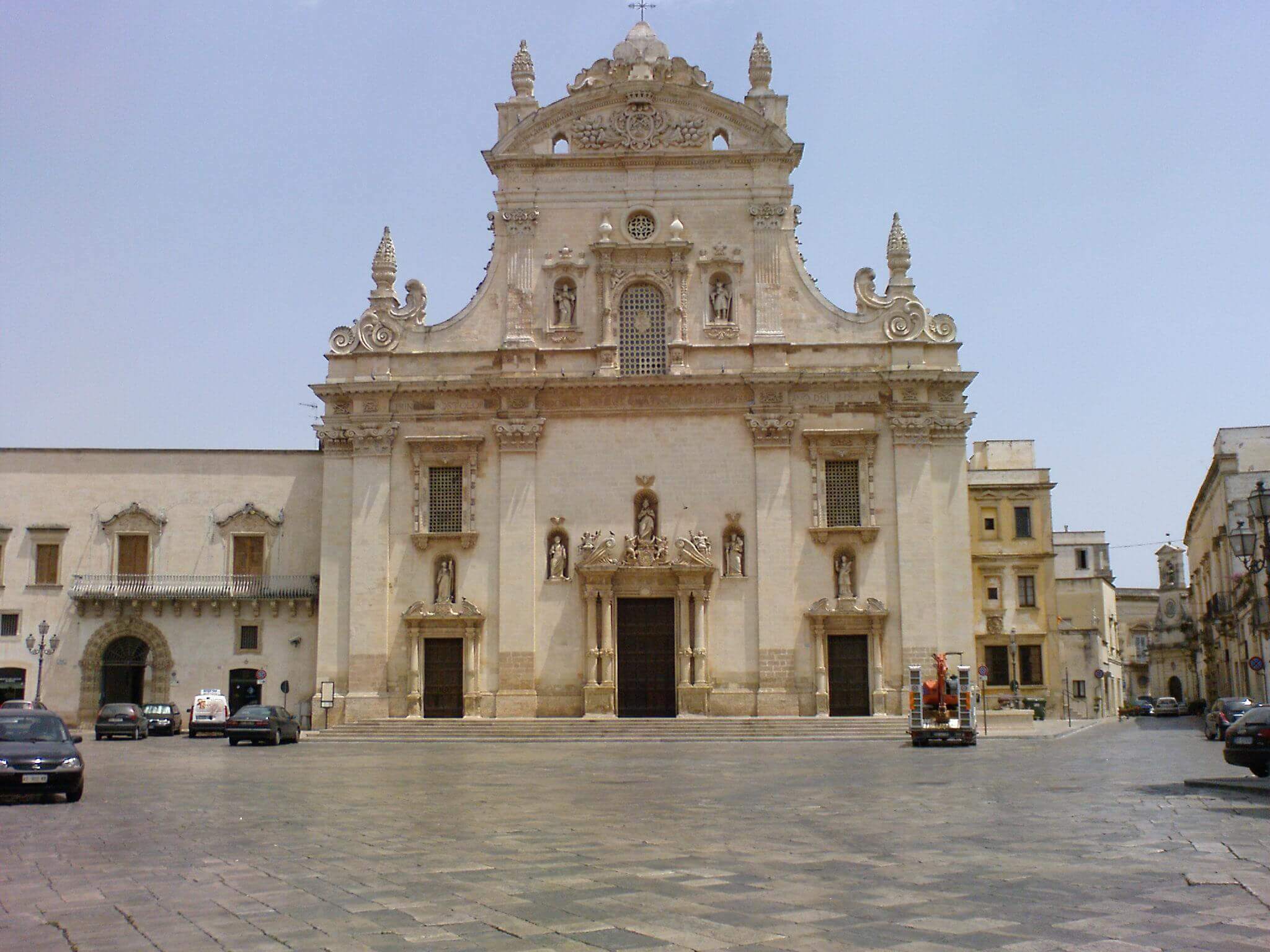
On Salento’s west coast, Gallipoli has one of the most interesting and unusual old towns. Originally built on a limestone island, the old town is connected to the mainland by a 16th century bridge. Walk through the maze of picturesque alleys and streets, where you’ll see fishing baskets and unique decor on walls of houses and in courtyards, especially in Corte Gallo. The Baroque SantAgata Cathedral, built in the 17th century, is in the center. A castle that once guarded the port stands near the old town entrance. Gallipoli is a great place to eat fresh seafood and there’s a nice stretch of beach along the old city walls too. From Lecce, Gallipoli can be reached via the private Trains of the Southeast.
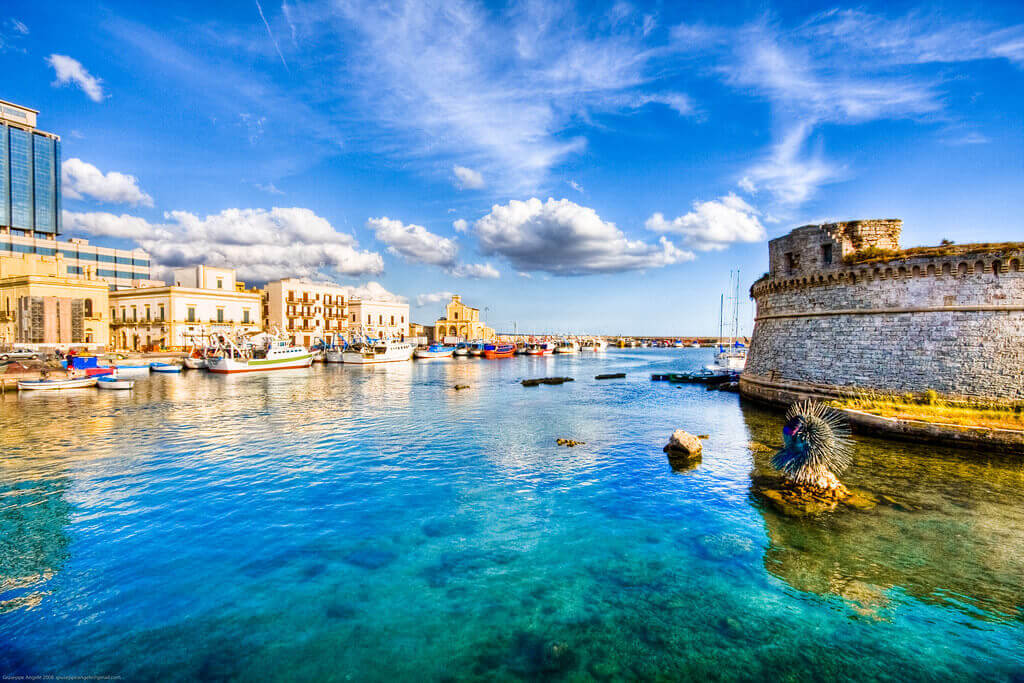
Lecce is the largest city in southern Puglia and the gateway to the Salento Peninsula. Since it’s on the main rail line of Italy’s east coast it’s easy to get to without a car. Lecce is known for its unique Baroque architecture called barocco leccese that you’ll see on many of its monuments and for traditional paper mache crafts, cartapesta. It also has remnants of its Roman past, a castle, a good shopping street, and several museums. The historic center is fairly small and mostly a limited-traffic zone so it’s easy to explore on foot.
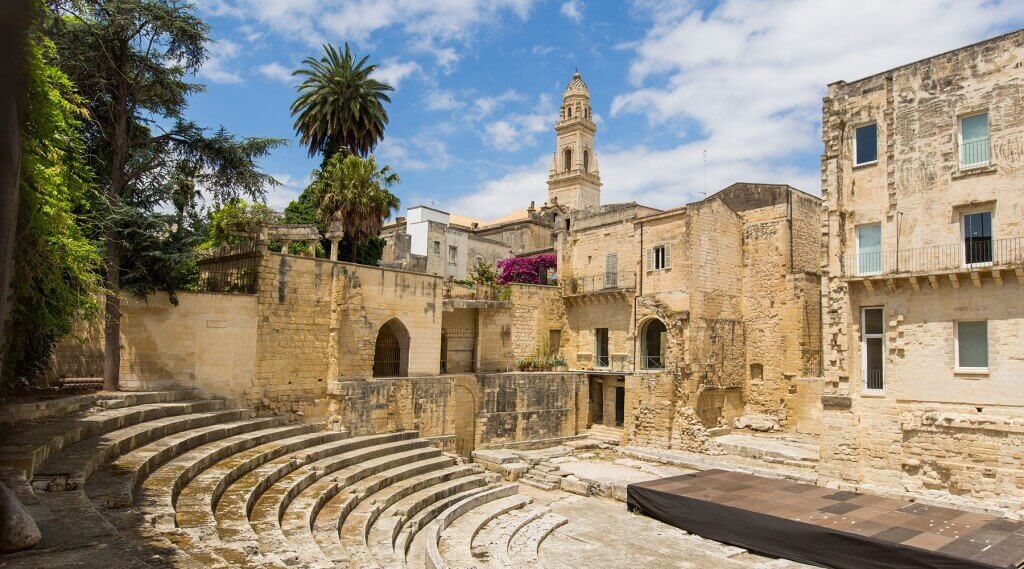
Where the Ionian and Adriatic Seas meet at the tip of the Salento Peninsula is the town of Santa Maria di Leuca. Leuca comes from the Greek word Leukos, white. In town you’ll see architecture that’s a mix of Moorish and Art Noveau styles. The seaside promenade is the place to go for good gelato and nightclubs. Because of its mild climate, there’s a long beach season and its a popular place for swimming in the emerald sea and boating. Underwater caves dot the coastline and you can see some of them on boat tours. On a hill overlooking the seas is its lighthouse, one of the most important in Italy and the De Finibus Terra e Basilica, meaning end of the lands, built on the site of a Roman temple. A staircase with nearly 300 steps connects it to the port.
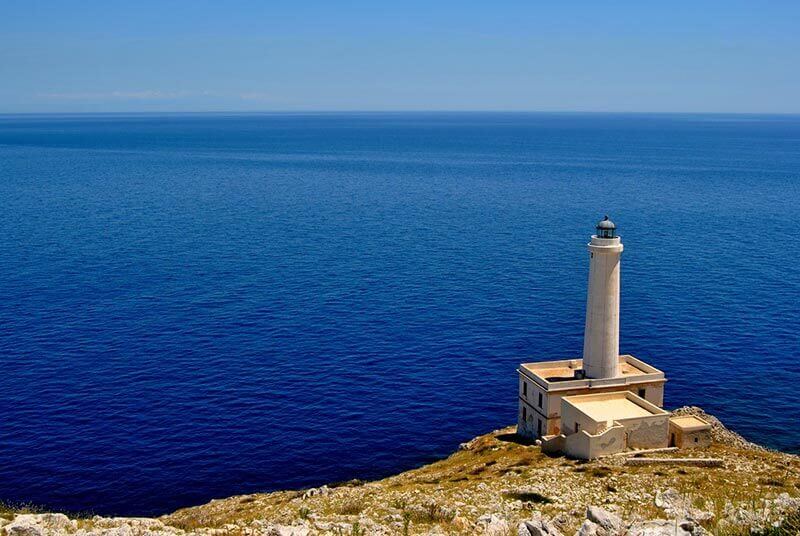
Otranto is a pretty white-washed town on the Salento’s east coast. The old town, partially enclosed by medieval walls, is a pleasure to walk around. Otranto’s 11th century cathedral has a beautiful mosaic floor and unusual chapel of skulls with remains of the 800 martyrs of Otranto who were killed in a Turkish invasion in 1480. An Aragonese castle sits just outside the old town and you can walk up to the top of the wall next to the castle for good views. Along the sea next to the walls, there’s a wide walkway with cafes and places to eat. Within walking distance of town there’s a beach where you can swim.
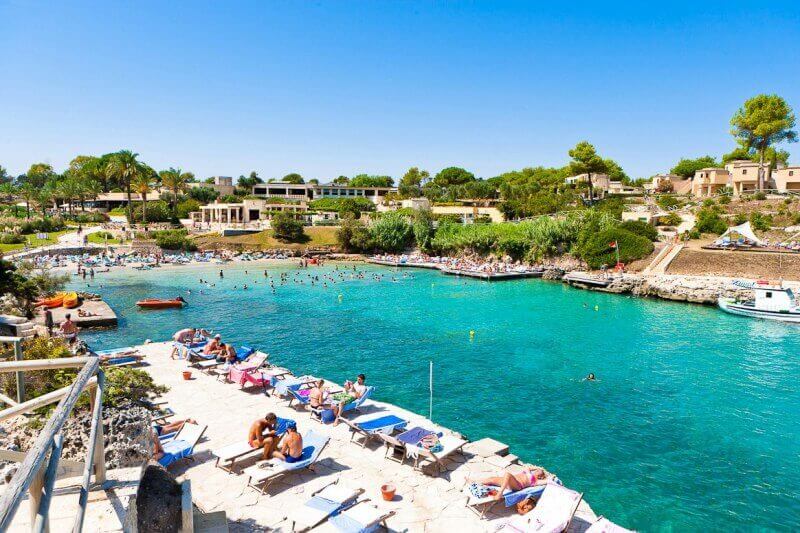
Perched atop a precipitous cliff, 100m above the sea, Castro looks out across the Adriatic towards Corfu and southern Albania, from where, it is said, Aeneas once arrived. Recent archaeological digs point to the probability of there having been a Temple of Athena on the site and this handily explains why the Romans called the town Castrum Minervae (Minerva being the Roman equivalent of the Greek goddess Athena). The Normans took control of the town in the 12th century, elevated it to a contea and started building the impressive fortress, which, alongside the defensive walls and towers, is one of Castro’s most significant attractions. Similarly venerable is Castro’s religious architecture, which includes a 12th century cathedral with a delightful Romanesque façade, and the remains of a small 10th century Byzantine church. Narrow roads weave around the old town centre and it’s a pleasure to stroll around, stopping off for refreshments in one of the bars or restaurants. All roads, it seems, lead to the main square and the panoramic terrazza, from where the views out to sea are superb. Down below, Castro Marina comes alive in the summer months, with bars, restaurants and cafés opening up along the seafront. The little harbour, usually home only to the town’s small fishing fleet, welcomes impressive yachts and pleasure boats. The rocky shoreline and crystalline waters attract swimmers and sunbathers, and the lidos fill up with holidaymakers from mid-June to mid-September.
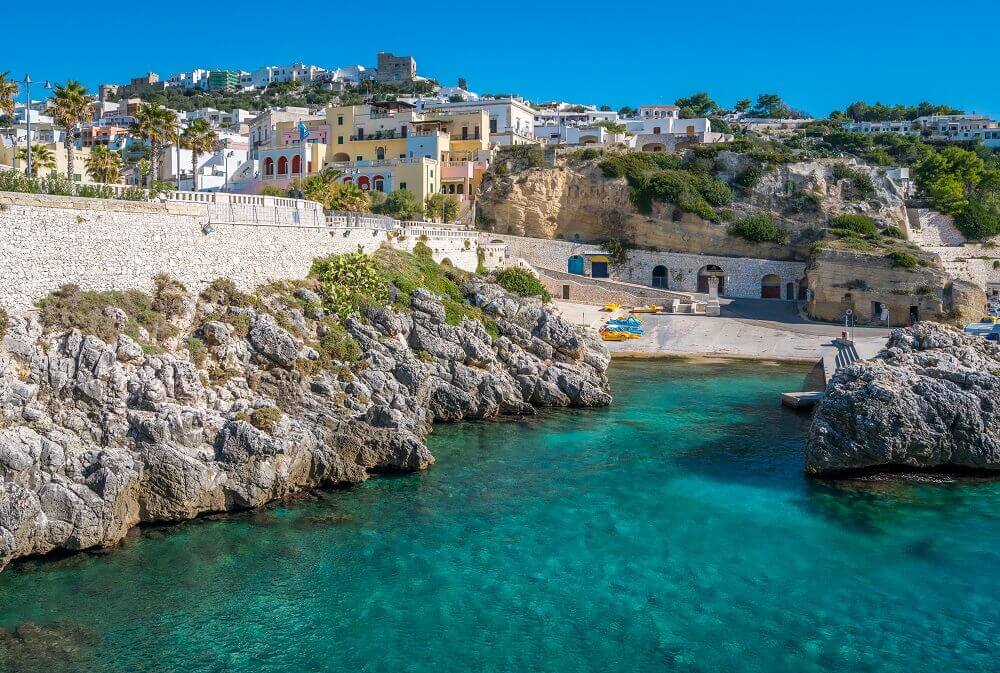
The old town of Galatina is a real open sky museum, with its stone paved streets, huge houses and old buildings with elegant doors and baroque decorations, courts full of flowers and arches and much more. Simply get lost through the small alleys and try to find all the hidden gems yourself, like the doors to the old city or the faces carved into the walls. Take your time to slowly walk through the small streets and just admire the details in every single decorations.You can see the St. Peter’s church, or Chiesa Madre, dominating the main square or the Chiesa delle Anime del Purgatorio, with an octagonal shape. But there are many more churches, such as San Biagio, Chiesa dei Battenti, San Luigi, Chiesa del Collegio, Madonna del Carmine and many more crypts outside of the town. You could easily spend a day trying to discover them all and notice the different decorative styles.Other iconic spots in the town is the Clock Tower, Torre dell’Orologio – local people like to think of it as our own version of the London’s Big Ben – and Piazza Dante Alighieri, the town main square and heart of Galatina, meeting point for people of all ages and where most of the nightlife happens.The number one reason to visit Galatina is trying the world famous pasticiotto. Although, by now, you will be able to find this delicious custard filled sweet almost everywhere in Italy – and sometimes even abroad –Galatina is its true birth place, where its recipe was created in 1745 by Nicola Ascalone. For this reason, the most famous place to try this food is Pasticceria Ascalone, run directly by the family of the pasticciotto creator. Situated right in the heart of the town, get ready to make a trip back in time, from the vintage furniture to the newspaper articles on the walls, full of reviews and praises to this amazing sweet.